


THE IMPORTANCE OF RUBBERWOOD
From a Traditional Resource to Sustainable Value for the Wood Industry
Rubber trees are widely cultivated in southern Vietnam, primarily for latex production, which serves various industries such as tires, mattresses, and other consumer products.
In recent decades, in addition to the value of rubber latex, rubberwood from trees that have completed their latex production cycle has increasingly been recognized as an important raw material for the wood processing industry.
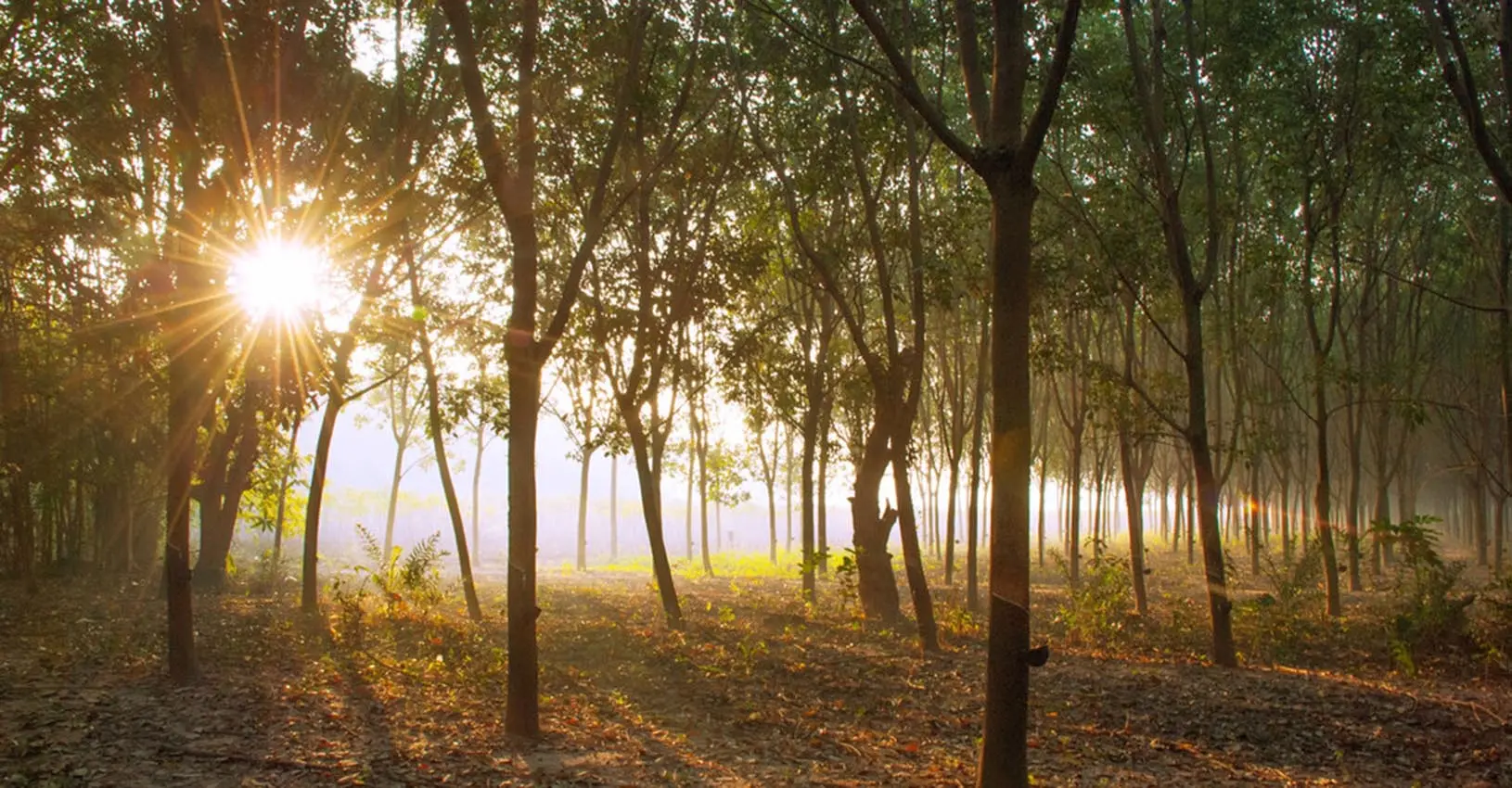
From Latex Production to a Source of Wood Material
In the past, rubberwood was often regarded as a wood species with limited durability and was not considered suitable for many furniture applications. However, with advances in wood processing and treatment technologies, these limitations have gradually been addressed, expanding the potential applications of rubberwood in manufacturing.
As the demand for stable wood resources continues to increase, utilizing rubberwood from trees after their latex production cycle provides an additional source of raw material for the wood industry while increasing the economic value of the crop.
Extending the Value of Rubber Trees
A rubber tree typically has a life cycle of approximately 20–25 years. During most of its growth cycle, the tree provides latex for various industries. Once the latex production cycle comes to an end, the trunk can continue to be utilized as raw material for the wood processing industry.
Using the trunk after the latex production cycle helps extend the value of a resource that has developed over many years while creating additional economic value from the crop.
With advances in wood processing technology, rubberwood is increasingly used in furniture and various other applications, gradually establishing its position in both domestic and international markets.
Economic Value Through Efficient Resource Utilization
As consumers and developed markets increasingly pay attention to raw material origins, resource efficiency, and environmental considerations, the effective utilization of cultivated resources after their primary production cycle is becoming increasingly meaningful.
For VIETWOOD, rubberwood is not only an important raw material for manufacturing but also represents our approach to using resources efficiently, increasing the value of raw materials, and pursuing sustainable development.
From a crop originally cultivated primarily for latex production, the rubber tree continues to create value for the wood processing industry after completing its latex production cycle. The connection between these two industries helps extend the useful value of the tree while creating additional economic value from the resulting wood resource.
This is also one of the foundations for VIETWOOD to continue developing rubberwood products with a focus on quality, efficiency, and alignment with the increasingly demanding requirements of domestic and international wood supply chains.